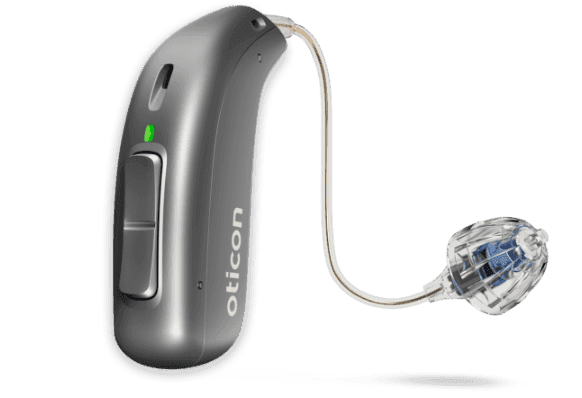
Oticon Hearing Aids
Finding creative answers for individual hearing difficulties was a major motivation for developing Oticon hearing aids when they delivered the world's first portable electronic hearing device (Acousticon) in 1904.
In the wake of forming a partnership with Charles Lehman, the newly formed American-Danish Oticon Company became one of the most well-known hearing aid manufacturers and suppliers after the Second World War.
Oticon made its first in-the-ear (ITE) amplifier accessible to the public in 1977, and nearly two decades later its first digital hearing aid in 1996, keeping pace with or outperforming their competition.
The manufacturer started to separate itself from the field once more in the beginning of the 21st century by coming up with its Brain Hearing concept and began building hearing aids with streaming and connectivity features by 2007
Oticon Hearing Aids
Oticon's Brain Hearing concept includes planning for and delivering sound processing innovations that increase the brain's ability to create meaning from the sound signals and speech it receives by supporting its natural capabilities instead of simply amplifying the sound signals.
Opn processing technology supports the Brain Hearing concept by allowing hearing aid wearers to more easily distinguish between a variety of speakers in an environment with background noise, improve sound quality, enhance voice clarity, and strengthen overall instrument performance.
Oticon Processing Technology
Personalization of your hearing aid experience is enhanced by Oticon hearing aids by using sound preservation technology with preprogrammed sound environments in order to achieve the most clarity, transparent sound quality, and speech details as you move from one location to another. Dynamic range expanded input also helps to eliminate issues with distortion and feedback.
Streaming and connectivity features not only allow you to link your hearing aids to other digital devices, like your TV or smartphone by using Sound Sharing to enhance the quality of your hearing aid experience, but they also facilitate programming and adjustment as well as providing help to those experiencing tinnitus symptoms by using an integrated sound generator.
The Genie app from Oticon, in combination with your cell phone, tablet, or PC, allows you to receive real time counseling and programming updates from your hearing care provider or device manufacturer without the need for an in-office consultation.
Oticon Hearing Aids Features
A big misconception many people have about hearing care is that the technology is what makes the difference. Although advanced prescription hearing aids from Oticon are among the tools we use to improve your hearing, partnering with the right team of audiologists makes the difference when it comes to a lifetime of better hearing.
For more than 20 years, Pacific Hearing, Inc. has partnered with thousands of individuals in Los Angeles and nearby communities to accurately diagnose their hearing challenges and start an ongoing journey of hearing care that not only has them hearing better but also helps them reconnect with loved ones and enjoy an active, more independent lifestyle.
Along with our “Hear as Good as You’ll Ever Hear” guarantee and our thorough “test drive” process that places the focus on providing each patient with the best possible outcomes to address their unique needs, preferences, and lifestyle, we sell, fit, and repair advanced prescription hearing aids from major manufacturers like Oticon, Persona, Phonak, ReSound, and more.
If you believe advanced technology hearing aids are the best solution to overcome your hearing challenges, we invite you to contact us to schedule a consultation with one of our hearing aid experts by using the adjacent form.
Hearing Care from Pacific Hearing, Inc. Is Focused on You
Finding creative answers for individual hearing difficulties was a major motivation for developing Oticon hearing aids when they delivered the world's first portable electronic hearing device (Acousticon) in 1904. In the wake of forming a partnership with Charles Lehman, the newly formed American-Danish Oticon Company became one of the most well-known hearing aid manufacturers and suppliers after the Second World War.
Oticon made its first in-the-ear (ITE) amplifier accessible to the public in 1977, and nearly two decades later its first digital hearing aid in 1996, keeping pace with or outperforming their competition. The manufacturer started to separate itself from the field once more in the beginning of the 21st century by coming up with its Brain Hearing concept and began building hearing aids with streaming and connectivity features by 2007.