Connecting Through Sound: Dr Lajayah Medina’s DeafDefy Ethiopia Mission
|
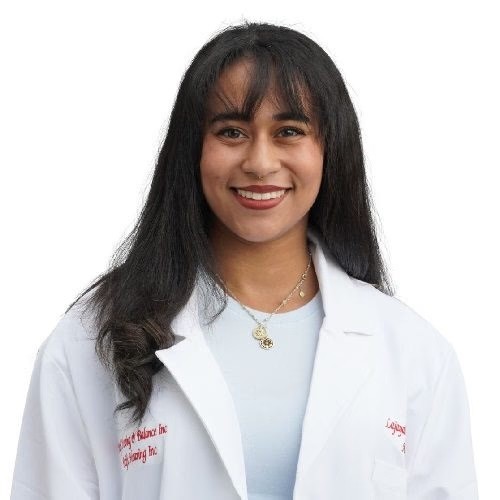
Lajayah Medina
|
Aug 13, 2026

My friends! I have an update: there was a change of plans, and I didn’t go to Ghana… DeafDefy and I went to Ethiopia instead! And honestly, this is good news! It meant that we were able to serve a greater population in need.
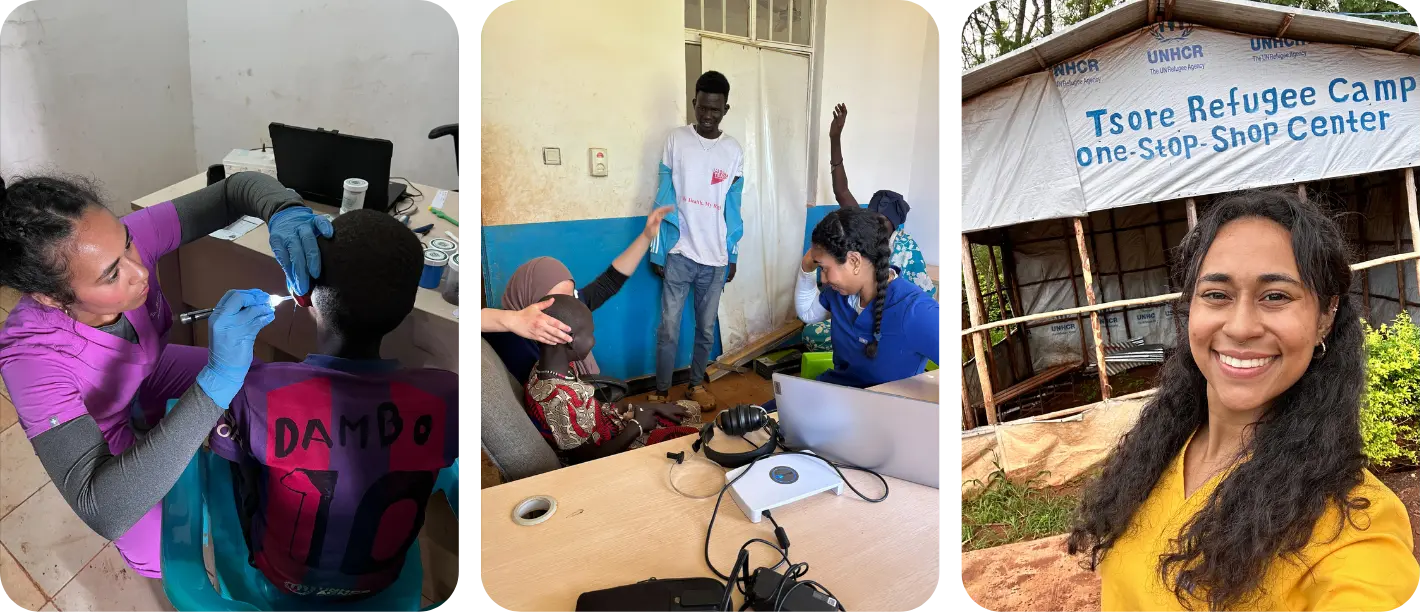
I had the pleasure of serving primarily Sudanese, Somali, and Eritrean refugees. We partnered with the United Nations High Commissioner for Refugees (UNHCR) and traveled to Gondar and Asosa in Ethiopia, Africa.
Man, oh man, where do I even start? The children, the city, the time change (literally, the Ethiopian calendar is 8 years behind the Gregorian calendar), the medical system, or how my heart was left in Africa upon returning home?
A New Depth of Love: Meeting the Children of the Refugee Camps
Let’s start with the children.
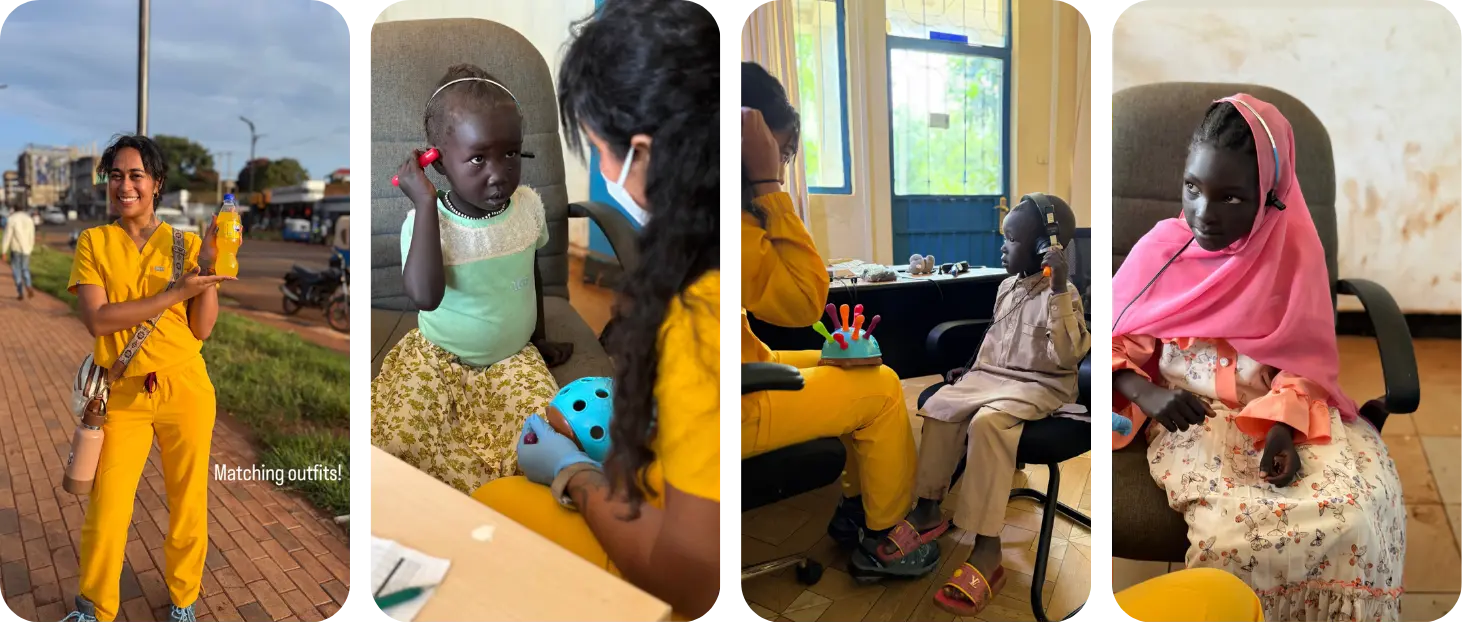
By far, my favorite part of this trip was being able to serve those in need. My heart truly feels the most fulfilled when I’m able to serve people who not only are in need, but who look like me.
There is something indescribable about seeing yourself reflected in the faces of the children you are serving. I found myself recognizing familiar features, expressions, and little pieces of myself in children I had only just met.
Then something happened that made that feeling even more real: I met a teenage boy who looked like my brother to a T.
I mean, the resemblance was uncanny. I remember being completely shocked because for a moment, it felt like I was looking at my own family thousands of miles away from home. It wasn’t just a passing resemblance; there was something about his face, his expression, and his presence that immediately felt familiar.
That moment changed something for me. Suddenly, this mission wasn’t an abstract idea about serving people on the other side of the world. It was personal. It made the distance disappear.
I saw my brother in him. And in some way, I saw myself in so many of the children we served.
My heart feels as though it has expanded beyond physical realms, causing it to explode beyond measure, because I now know a new depth of love. A love that is not measured by time or proximity, but rather by a shared identity. There is something powerful about realizing that a person can be completely unfamiliar to you and yet somehow feel familiar at the same time.
We served a total of 97 children in the refugee camps, the most children we have ever been able to serve on a single mission. Behind that number are 97 individual children with their own stories, families, dreams, challenges, personalities, and futures.
In Asosa, we worked across three different camps: Sherkole, Ura, and Tsore, with additional children being bussed in from Aftit, Alemwach, and Bambassi camps. We were truly working in the field, bringing our services directly into the camps.
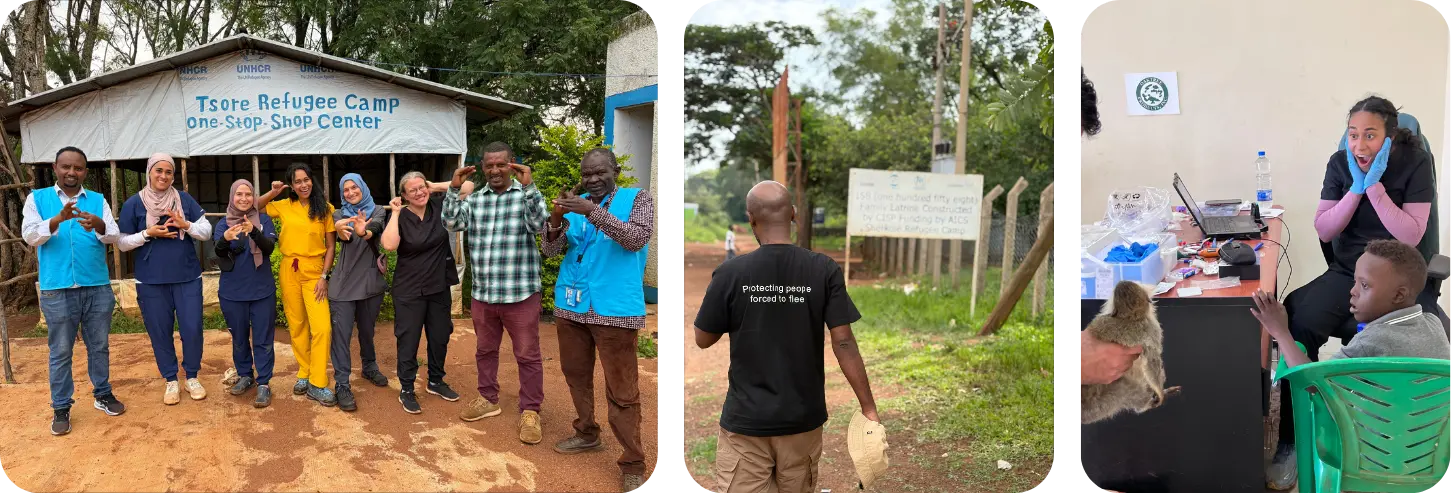
We set up three sections: hearing testing, hearing aids, and language access. Our team consisted of two audiologists, two language interpreters, two deaf language specialists, and the founder, Zaineb.
One of the most special parts of this trip was having a local Deaf language specialist from Ethiopia join our team. Having someone who is Deaf, Ethiopian, and connected to the language and culture of the children we were serving brought a perspective that simply cannot be replicated from thousands of miles away.
It reminded me again why this work matters so much: the goal isn’t to make children fit into our world; the goal is to give them access so they can fully participate in theirs.
This is what I love about DeafDefy. We don’t simply show up, test a child’s hearing, put a hearing aid on their ear, and leave. We recognize that access to sound is not the same thing as access to language.
A child can have access to amplification and still be isolated if they don’t have a language they can understand and communicate through. That’s why we work to make sure children have access to language that is natural and meaningful to them.
One of the most rewarding parts of this work is knowing that when we return to communities we’ve served, we can begin to see pieces of these children’s lives return to them.
A child who was once unable to communicate can begin expressing what they want. A child who sat quietly can begin engaging with their peers. A parent can communicate with their child in a way they couldn’t before. A child can learn, play, ask questions, tell jokes, make friends, and begin imagining a future that feels a little more accessible.
Being able to witness that kind of progress is one of the greatest privileges of this work.
Advocating, Documenting, Communicating
Then there was the medical system. This was probably one of the parts of the trip that challenged me the most professionally.
I learned more about how watchful waiting is used for certain mild childhood ear infections because many uncomplicated infections resolve on their own. There is good evidence behind this approach for selected cases when appropriate follow-up is available.
But what happens when “wait and see” becomes “wait and see” without reliable access to follow-up? That was where I began to wrestle with what I was seeing.
Again and again, children and their families told us that their child had ear pain. They weren’t hearing when their names were called, they were struggling to hear, and when we examined them, some of these children had active ear infections. Yet they had been living with these symptoms, and some had already gone to medical clinics seeking help.
I found myself thinking: What happens when a medical approach designed around the general population doesn’t account for the lived experience of the individual patient?
These children were living in refugee camps. Their families had already experienced displacement, uncertainty, and unimaginable disruption. Getting to a clinic was not necessarily as simple as calling a pediatrician, getting an appointment, picking up a prescription, and returning for follow-up.
We weren’t there to criticize the local medical providers. They were working within their own healthcare system, resources, protocols, and limitations, and I have so much respect for the people caring for these communities with what they have.
But I also realized that patient advocacy sometimes means asking one more question and saying, “This child is still hurting. This child is still not hearing. This infection needs to be addressed.”
We couldn’t simply put a hearing aid on a child with an active ear infection and call it a day. The infection needed to be treated first so that we could appropriately move forward with hearing care.
So, our team and I became more vocal. We asked more questions, advocated more strongly, and made sure our notes clearly emphasized when a child had an active infection that required medical attention before hearing-aid services could appropriately move forward.
We couldn’t prescribe the treatment ourselves, but we could advocate. We could document. We could communicate. We could make sure that the child wasn’t reduced to a hearing test result.
That became one of my biggest lessons from the trip: audiology is not just about hearing, and healthcare is not just about following a protocol. Sometimes good healthcare means understanding the protocol and then understanding the person sitting in front of you. Access isn’t simply whether a service technically exists; access means whether a person can actually receive it.
And if there are barriers standing between a child and the care they need, our job is to find a way around them.

Experiencing Ethiopia
Then there was Ethiopia itself.
The city felt like another world. The first thing I noticed was the red dirt: not just dirt, but this incredibly rich, crimson soil colored by iron. It was everywhere, woven into the landscape, and honestly, it was beautiful.
Funny enough, the dirt reminded me of pica, and I jokingly thought, “Maybe one day I might need this,” so naturally I took some home. Yes, I brought Ethiopian red dirt home with me. I don’t really know what I plan to do with it yet, but somehow it felt important to have a tiny piece of that place with me.
The scenery was breathtaking. There were moments when I genuinely felt like I had stepped into a movie or been transported back in time. Everything felt so unfamiliar yet so alive: the landscape, the pace, the sounds, the people, and the way daily life unfolded around me.
I felt removed from the constant speed and noise of my everyday life and placed into a world where people seemed more connected to the physical place they lived.
There was a sense of community that I found incredibly refreshing. People had their own lives, responsibilities, families, and routines, but there seemed to be a greater awareness that those individual lives were still part of something larger. There was communion without constant intrusion, togetherness without the expectation that everyone had to be the same.
People seemed to understand that we could each have our own lives while still respecting the fact that we exist alongside one another. And I loved that.
At the same time, I don’t want to romanticize poverty or pretend that life in Ethiopia was perfect simply because I found parts of the culture refreshing. There were very real hardships and limitations in healthcare, infrastructure, resources, and human rights that were impossible to ignore.
There are freedoms and protections that I am accustomed to in the United States that simply aren’t experienced in the same way everywhere in the world. That was sobering. But it also made me question how much of what I call “comfort” is actually connection. How much of what I call “freedom” is actually isolation? How much of my life is spent trying to make everything more convenient when perhaps some inconvenience is what forces us to depend on one another?
I don’t have answers to those questions, but Ethiopia gave me the space to ask them.
An Experience I’ll Never Forget
And then I came home. Physically, at least.
I returned to my normal routines, my normal surroundings, and a life that suddenly felt a little different. After spending time with children whose families had been displaced, working in camps where access to basic healthcare could be so difficult, and seeing how deeply people depended on one another, it was strange to step back into the comforts I had always considered normal.
I find myself thinking about the children constantly. About that teenage boy who looked like my brother. About the parents who brought their children to us, hoping we could help. About the children who were finally able to access sound and language. About the ones we couldn’t yet help because they needed medical treatment first.
And I realized that perhaps this is why my heart feels like it was left in Africa.
It wasn’t just the children. It wasn’t just the work, the beautiful landscape, or even the red dirt I somehow managed to bring home with me. It was the feeling of being somewhere that challenged the way I understood healthcare, community, identity, access, and even my own life.
I went to Ethiopia to serve, but I think Ethiopia served me, too. I went there thinking about what I could give, and I came home realizing how much I had received. And I’m still trying to understand everything it gave me.
Learn more about how Pacific Hearing gives back through our partnership with DeafDefy.