The Link Between Age-Related Hearing Loss and Oxidative Stress: Is It Manageable?

|
Gregory Frazer
|
Nov 21, 2024
Can your environment and lifestyle choices contribute to the early development of age-related hearing loss? If so, is there anything you can do to delay the process? According to a team of researchers in Australia who published their finding in the Antioxidant Journal, “practicing healthy and safe lifestyle behaviours appears to have a role in delaying age-related oxidative damage to the inner ear and, thereby, can help to preserve auditory cells and inner ear function.” As a hearing care professional, I am always looking for ways to help my patients and anyone else concerned about their hearing delay and the interruption of their active and independent lifestyle because of hearing loss. This post is dedicated to helping educate our patients and the communities we serve in Greater LA as to the various ways you might be able to manage the development of age-related hearing loss (ARHL) or presbycusis by making certain healthy and safe lifestyle choices.
What Is Oxidative Stress and How Does It Affect Your Hearing?
Before we can figure out how to delay the onset of ARHL, we need to understand oxidative stress and how it contributes to hearing loss. The Australian study notes that “lifestyle risk factors such as exposure to noise and ototoxic chemicals, smoking, a lack of physical activity, a poor diet, and the presence of chronic lifestyle diseases can create stressful environments that exacerbate the pro-oxidant and pro-inflammatory processes in the body.” These processes cause damage on a cellular level, which leads to the early death of the hair cells in your inner ear as well as those related to the nerves that help transmit sound to your brain. In addition to these processes, damage can be done by reactive oxygen species (ROS), which damage DNA, RNA, and proteins and cause cell death. Your body is capable of protecting against cell damage through the release of certain enzymes and/or nitric oxide to maintain vascular tone as well as control platelet adhesion, blood clotting, and vascular proliferation that declines as you age. In addition to aging and poor vascular health, oxidative stress can be induced by the presence of several health comorbidities and environmental and genetic factors. The bad news is that not all of these risk factors are modifiable; the good news is that some of them are.
6 Modifiable Lifestyle Risk Factors to Reduce Oxidative Stress
Research related to lifestyle risk factors that can have an effect on reducing oxidative stress suggests that there are six modifiable risk factors, including:
Excessive and/or frequent exposure to loud noise can damage your hearing on both a mechanical and metabolic (cellular) level. They can be heard in occupational, recreational, and environmental settings, including building and construction, mining, concerts, personal music devices, traffic, and home appliances. Damage to your hearing can be prevented by maintaining responsible listening levels and the use of hearing protection during high-noise activities.
The introduction of pharmaceutical drugs, solvents, asphyxiants, and heavy metals through oxidative stress-inducing pathways damages the auditory system on a cellular level, causing damage and death to inner ear cells and auditory nerve cells. The damage can be prevented by avoiding these ototoxic chemicals and consulting with your doctor about altering your medications to a non-ototoxic formula.
Cigarette smoke contains ototoxic chemicals such as hydrogen cyanide and ROS, as well as various water-soluble components that can circulate throughout your body, causing systemic oxidative stress. Several studies cited within the Australian study show an increased risk of premature hearing loss of between 31 and 61 percent. The prevention? Stop smoking.
Alcohol-induced oxidative stress is produced through the process of ethanol metabolism, which produces ROS. Various studies included in the Australian paper indicated a reduction in ARHL risk by a factor of between 28 and 40 percent through alcohol moderation. However, the consumption of red wine with the antioxidant resveratrol can help reduce oxidative stress.
Exercise reduces the amount of visceral fat. This stimulates the release of adiponectin, a substance that has anti-inflammatory, anti-oxidative, and antiapoptotic (prevents cell death) properties. Studies are less numerous when it comes to the links between exercise and reduced risk of hearing loss, but those available suggest a decrease of between 10 and 18 percent.
Nutritional experts in every sector of health care encourage the consumption of antioxidants and a reduction or the elimination of foods that cause oxidative stress or an inflammatory response. A diet rich in antioxidants and micronutrients that can inhibit inflammation and reduce oxidative stress consists of nutrient-rich vegetables, fruit, fish, olive oil, and moderate red wine intake. Specific nutrients that contribute to reducing oxidative stress include vitamins A, C, and E along with magnesium to counter pro-oxidant activity and maintain healthy concentrations of nitric oxide in the bloodstream. Sugar and carbohydrate intake lead to the processes of glycation and glycoxidation of sugars that result in the production of ROS. Consequently, a reduction in sugar and carbohydrate intake, according to one of the studies cited, demonstrates a 62 percent lower risk of ARHL for individuals under the age of 70.
Monitoring Your Progress at Pacific Hearing Inc
As the study suggests, there are lifestyle choices that may be able to delay the onset of ARHL, allowing you to continue to enjoy the quality of life you’re used to before hearing loss begins to take that away.
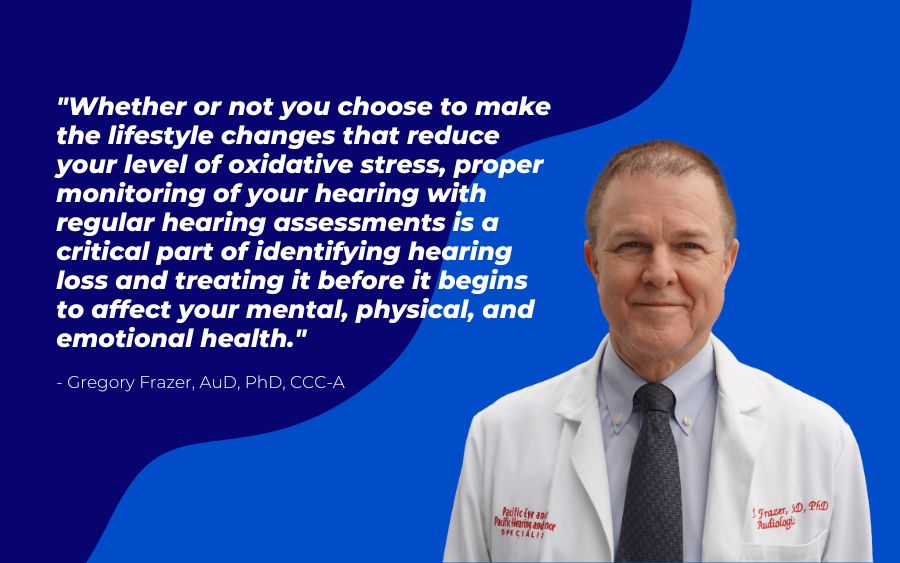
Whether or not you choose to make the lifestyle changes that reduce your level of oxidative stress, proper monitoring of your hearing with regular hearing assessments is a critical part of identifying hearing loss and treating it before it begins to affect your mental, physical, and emotional health. If you are over the age of 50, you should be having your hearing tested every two years so that you can be ahead of the game whenever the first signs of hearing loss begin to appear. Schedule a hearing assessment at Pacific Hearing Inc online using this link or give us a call at (310) 909-0180.